I am a computational biologist and postdoctoral fellow in Dr. Rendong Yang’s lab at Northwestern University Feinberg School of Medicine. My research focuses on developing computational methods and machine-learning approaches for cancer genomics and transcriptomics, with a particular interest in long-read sequencing. I use technologies such as Oxford Nanopore sequencing to study structural variants, transcriptomic alterations, and other complex molecular events that are difficult to resolve with conventional approaches.
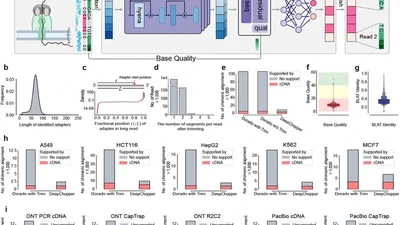
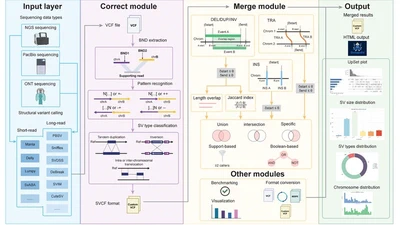
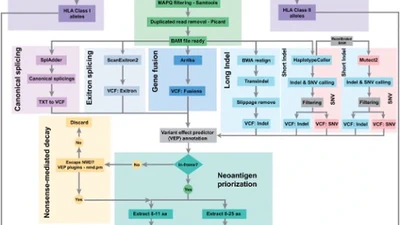
Much of my work is driven by practical problems that emerge from real genomic data. I am the lead developer of OctopuSV (Bioinformatics), an automated toolkit for multi-sample structural variant analysis. I have also contributed to DeepChopper, a genomic language model published in Nature Communications for identifying chimeric artifacts in nanopore direct RNA sequencing, and ScanNeo2 (Bioinformatics), a workflow for neoantigen detection. My broader work spans long-read DNA and RNA sequencing, cancer immunogenomics, regulatory genomics, and multi-omic analysis.
My early academic training gave me a foundation in algorithm development, comparative genomics, and multi-omic data analysis. My scientific perspective was further shaped by my time at Oregon State University in 2014, where Prof. Jerri Bartholomew’s mentorship strengthened my interest in genomics, evolution, and data-driven biological discovery.
To date, I have authored or co-authored 26 peer-reviewed publications, including eight first-author papers, with work published in Nature Communications, Science Advances, Bioinformatics, BMC Biology, and other journals.
I am especially interested in the intersection of AI, long-read sequencing, and biomedical genomics. My long-term goal is to develop computational approaches that make complex genomic and transcriptomic events easier to resolve, interpret, and connect to cancer biology, while continuing to build an independent research direction in this area.